
Your buyers are no longer only typing keywords into Google. They are asking ChatGPT, Gemini, Perplexity, Claude, Google AI Overviews, and other AI search experiences which brands to trust, which solutions to compare, and which provider is best for their situation. That is why learning how to improve brand visibility in AI search engines is now a serious growth priority.
For many brands, the problem is not that they lack expertise. The problem is that AI systems do not yet have enough clear, consistent, well-positioned information to understand when the brand should be mentioned, compared, cited, or recommended.
Shoden Global helps brands solve this by building a prompt-led AI visibility strategy. We identify what your buyer personas are asking LLMs, create comparison content that answers those prompts, strengthen brand mentions across trusted sources, and position your USP clearly where buyer discovery and buyer decisions happen.
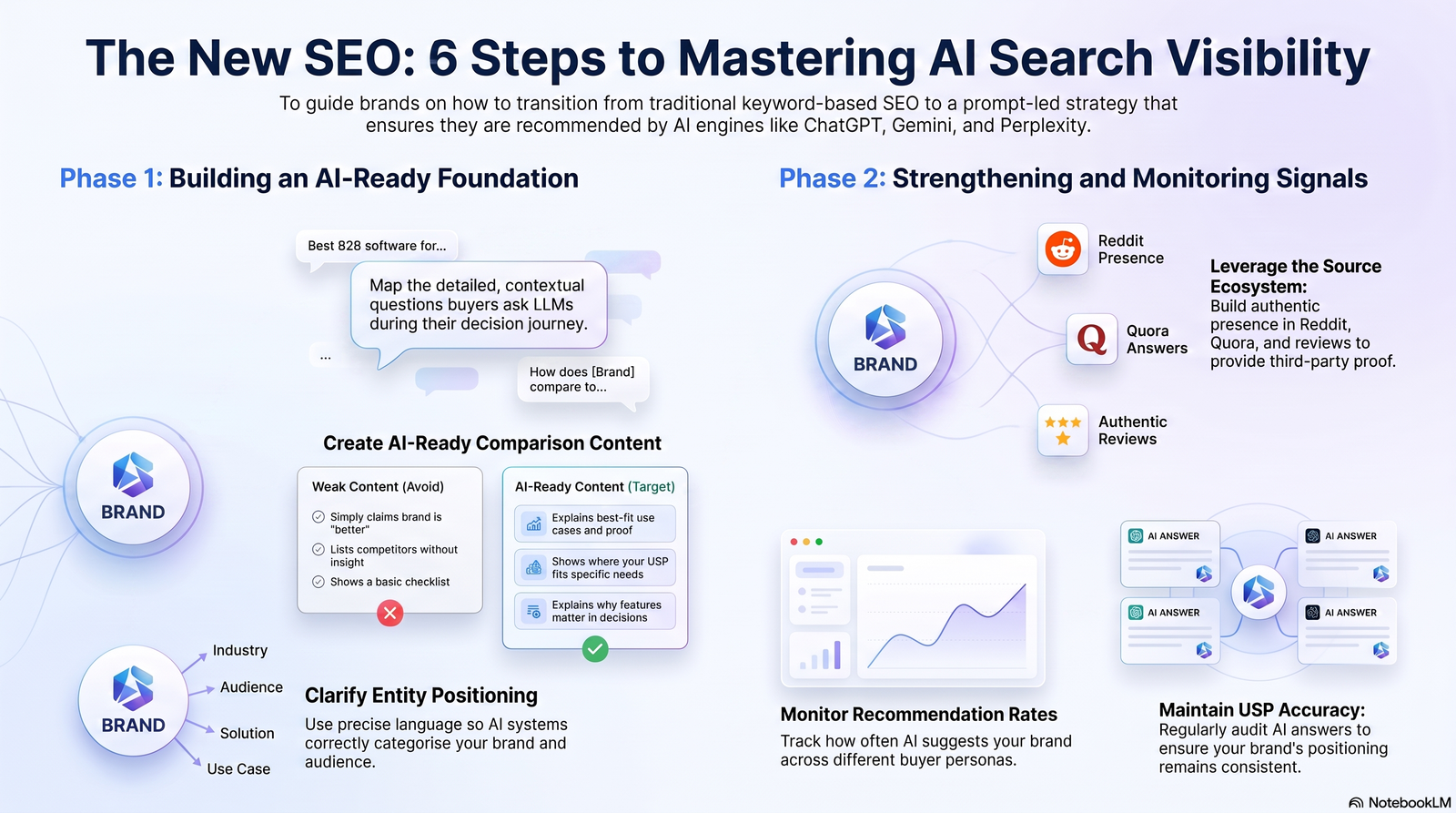
Table of Contents
What Does Brand Visibility in AI Search Engines Mean?
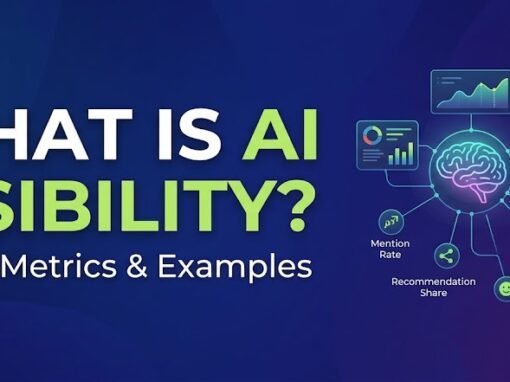
AI visibility is the degree to which your brand appears, is accurately understood, and is recommended in AI-generated answers when buyers ask about your category, problem, competitors, alternatives, use cases, reviews, or buying decision.
Brand visibility in AI search engines means your company is not just findable in search results. It means your brand becomes part of the answer when someone asks an AI system for help choosing, comparing, or understanding a solution.
In traditional SEO, a user sees a list of pages and chooses what to click. In AI search, the answer may summarize the options, compare brands, recommend a solution, and cite supporting sources before the user reaches your website.
That changes the job of content.
Your content must help AI systems understand:
- Who your brand serves
- What problem you solve
- What category you belong to
- Which buyer personas you are best for
- How you compare with alternatives
- What your unique USP is
- What proof supports your positioning
- Where your brand is mentioned outside your website
Google says its generative AI search experiences are rooted in core Search ranking and quality systems, and that useful, unique, people-first content still matters for visibility in these experiences. Google also explains that generative AI features can use query fan-out, where related searches are generated to help answer a broader user question.
That means a brand cannot rely on one generic service page. It needs a structured web of content and source signals that answer the full decision journey.
Why Are Buyers Asking AI Tools Before Visiting Websites?
Buyers use AI tools because they want faster answers, clearer comparisons, and more personalized recommendations. Instead of opening ten tabs, they can ask one detailed prompt and receive a summarized answer.
A buyer might ask:
- Which AI visibility agency is best for a B2B SaaS company?
- How do I improve visibility in Google AI Overviews?
- What are the best alternatives to my current SEO agency?
- Which provider can help my brand appear in ChatGPT recommendations?
- How do I get my brand mentioned in Reddit and Quora discussions?
- What strategies improve brand visibility in AI search engines?
These are not casual searches. They are discovery and decision prompts.
OpenAI describes ChatGPT search as a way to get timely answers with links to relevant web sources, combining a natural language interface with web information.
This is why AI visibility matters. If your brand is not present in the sources and conversations that AI systems use to form answers, your competitors may become the default recommendation.
What Strategies Improve Brand Visibility in AI Search Engines?
The strongest strategies for improving brand visibility in AI search engines are buyer prompt research, comparison content, entity clarity, third-party proof, community positioning, technical SEO, and continuous AI visibility tracking.
Here is the practical process Shoden Global uses.
- Map the prompts your buyers actually ask.
Keyword research is still useful, but AI visibility starts with prompt research. A prompt is often more detailed than a keyword because it includes context, comparison, buyer type, and intent.
For example:
- Best CRM for small law firms
- HubSpot vs Salesforce for B2B SaaS
- Which AI visibility agency helps with Reddit and Quora?
- How do I get my brand recommended in AI answers?
- What is the best solution for a company with a limited marketing team?
These prompts reveal what buyers need before they decide.
- Build comparison content around decision moments.
Comparison content helps buyers and AI systems understand your category. It explains who each solution is for, where your brand is strongest, what tradeoffs matter, and why your USP is relevant.
This content can include:
- Brand vs competitor comparisons
- Alternative pages
- Best-fit solution pages
- Use-case comparison pages
- Industry-specific decision guides
- Problem-solution comparison pages
- Make your USP easy to extract.
AI systems need clear information. If your positioning is vague, the answer may ignore your brand or describe it incorrectly.
Weak positioning:
We help companies grow with digital marketing.
Clearer positioning:
Shoden Global helps brands improve AI visibility by creating comparison content, buyer prompt strategies, Reddit and Quora positioning, and brand mention systems that increase the chance of being recommended in AI-generated answers.
- Strengthen your source ecosystem.
Your own website matters, but it is not the only source. Reviews, interviews, expert quotes, partner pages, community discussions, case studies, citations, and brand mentions all help build context around your brand.
- Monitor what AI systems say.
AI visibility must be tracked. You need to know which prompts mention your brand, which competitors appear, whether your USP is correct, and whether the answer recommends you for the right buyer persona.
How Does Comparison Content Help AI Recommend Your Brand?
Comparison content helps AI recommend your brand because it gives AI systems structured, decision-ready information about your strengths, competitors, use cases, and ideal-fit buyers.
Many AI prompts are naturally comparative. Buyers ask:
- What is the best option?
- Which company is better?
- What are the alternatives?
- Who is best for my niche?
- Which tool should I use?
- What agency should I hire?
Google explains that AI Mode is useful for complex questions and comparisons, and its systems may explore related subtopics and sources to build a more complete response.
That makes comparison content one of the most important formats for AI visibility.
Weak comparison content simply lists features. Strong comparison content helps the buyer make a decision.
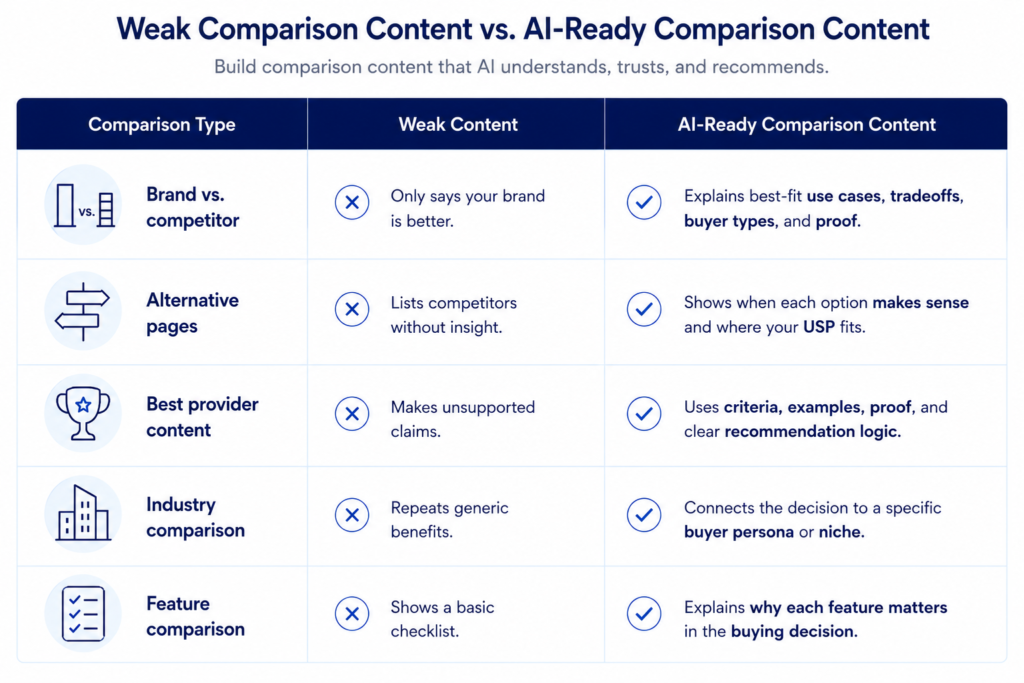
Shoden Global uses comparison content to position your brand where it belongs. The goal is not to create biased content. The goal is to create high-quality, well-positioned content that helps AI systems answer the prompts your buyers are already asking.
Which Buyer Prompts Should Your Brand Be Visible For?
Your brand should be visible for prompts that match the buyer journey: problem discovery, solution research, alternative comparison, trust validation, and final decision-making.
Not every prompt is equally valuable. A broad informational query can create awareness, but a decision prompt can influence revenue.
Important buyer prompt categories include:
- Problem prompts: How do I solve this issue?
- Category prompts: What type of service do I need?
- Comparison prompts: Which option is better?
- Alternative prompts: What are the best alternatives?
- Use-case prompts: What is best for my niche?
- Trust prompts: Who is credible?
- Review prompts: What do users say?
- Decision prompts: Who should I choose?
For AI visibility, the most valuable content often answers prompts like:
- Best solution for [buyer type]
- Best provider for [industry]
- [Brand] vs [competitor]
- Alternatives to [competitor]
- How to choose a [solution category]
- What is the best [service] for [specific problem]
- Which company helps with [specific outcome]
Shoden Global maps these prompts to your buyer personas. That allows your content to answer not only what people search for, but what buyers ask LLMs when they are close to making a decision.
Do Brand Mentions Improve AI Search Visibility?
Brand mentions can improve AI search visibility when they are authentic, relevant, and connected to trusted sources. Mentions help reinforce what your brand does, who it serves, and why it may deserve to be included in AI-generated answers.
Brand mentions can appear in:
- Industry publications
- Expert roundups
- Reviews
- Podcasts
- Partner pages
- Directories
- Case studies
- Forum discussions
- Reddit threads
- Quora answers
- Comparison articles
- Customer testimonials
However, quality matters more than volume.
Google warns that seeking inauthentic mentions is not a helpful strategy for generative AI search, and that its systems focus on high-quality content while spam systems work to block manipulation.
This is important. AI visibility is not about flooding the web with fake mentions. It is about making sure the right sources describe your brand accurately and consistently.
A strong brand mention should communicate:
- Your category
- Your audience
- Your USP
- Your proof
- Your relevance to a specific problem
- Your comparison position against alternatives
How Do Reddit and Quora Help Your Brand Become Part of the AI Conversation?
Reddit and Quora help your brand become part of the AI conversation because they contain real buyer questions, objections, comparisons, recommendations, and first-hand opinions. These platforms show how people actually talk when they are trying to make a decision.
Reddit is especially important because OpenAI announced access to Reddit’s Data API to help its tools better understand and showcase Reddit content, and Google also announced expanded access to Reddit data to better understand and display Reddit content.
Google also supports discussion forum structured data for forum-style sites where people share first-hand perspectives, and says this can help Google better identify online discussions across the web.
For brands, the opportunity is clear: buyer conversations matter.
But this must be handled carefully. Reddit and Quora are not places to drop promotional links. They are places to answer questions, add expertise, clarify tradeoffs, and participate where your brand genuinely belongs.
Shoden Global helps brands:
- Find the communities where buyer discovery happens
- Identify questions related to alternatives, comparisons, and recommendations
- Understand buyer language and pain points
- Create helpful answers that lead with value
- Position the brand’s USP without forcing promotion
- Track whether community visibility supports AI answer visibility
The goal is to become part of the conversation in a credible way, not to manipulate the conversation.
How Do Product Reviews Impact AI Search Visibility?
Product reviews and service reviews impact AI search visibility by giving buyers and AI systems third-party proof about what a brand does well, where it fits, and how customers describe the experience.
Reviews are especially useful because they often include natural buyer language. A review may mention:
- The problem the customer had
- Why they chose the brand
- What alternatives they considered
- What outcome they achieved
- What feature or service mattered most
- What type of company the solution fits
This language can support AI visibility because it reinforces real-world positioning.
For example, if multiple reviews mention that a company is strong for “B2B SaaS content strategy,” “technical SEO,” or “AI visibility,” those phrases help create a consistent pattern around the brand.
Strong review signals should be:
- Specific
- Authentic
- Recent
- Relevant to the buyer persona
- Connected to clear outcomes
- Consistent with your USP
Poor review strategy is vague. Strong review strategy helps buyers and AI systems understand why your brand should be considered.
How Do You Monitor AI Search Visibility?
You monitor AI search visibility by testing the prompts your buyers ask, recording whether your brand appears, checking how it is described, and comparing your visibility against competitors.
AI visibility tracking should include:
- Brand mentions
- Competitor mentions
- Recommendation rate
- Citation sources
- Answer accuracy
- USP consistency
- Sentiment
- Prompt coverage
- Buyer persona coverage
- Community source visibility
- Review and third-party proof signals
This is different from rank tracking. A rank tracker tells you where a page appears. AI visibility tracking tells you whether your brand is part of the answer.
A simple AI visibility tracking process looks like this:
- Create a prompt list based on your buyer personas.
Start with problem prompts, comparison prompts, alternative prompts, and decision prompts.
- Test the prompts across key AI platforms.
Check ChatGPT, Google AI Overviews, Google AI Mode, Perplexity, Gemini, Claude, and any platform your audience uses.
- Record whether your brand appears.
Do not only check for mentions. Check whether the answer recommends your brand and whether the recommendation is relevant.
- Compare competitor visibility.
Identify which competitors appear more often and which sources support their visibility.
- Review the source patterns.
Look at whether answers are influenced by review sites, community discussions, comparison articles, official websites, directories, or media mentions.
- Fix the gaps.
Create missing comparison content, improve service pages, clarify your USP, build authentic mentions, and strengthen third-party proof.
- Recheck prompts regularly.
AI answers change. Monitoring helps you understand whether your strategy is improving.
What Is an AI Visibility Score?
An AI visibility score is a way to measure how often your brand appears, how accurately it is described, and how often it is recommended across important AI prompts.
A useful AI visibility score should not only count mentions. A brand can be mentioned often and still be poorly positioned.
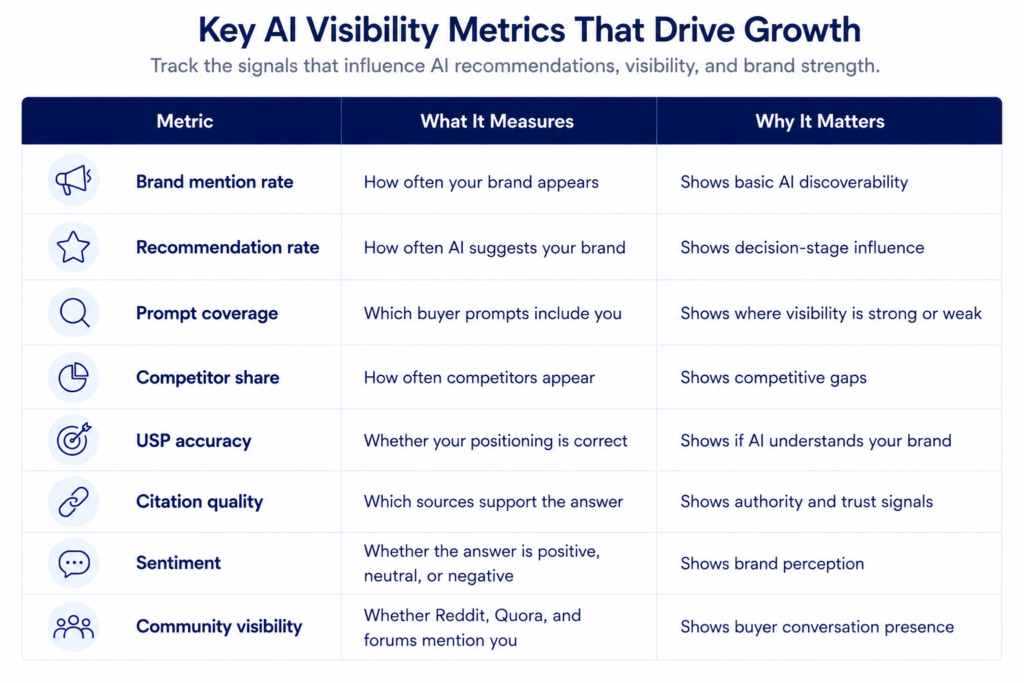
The strongest AI visibility score connects visibility with buying intent. The goal is not to appear everywhere. The goal is to appear in the prompts that influence discovery, comparison, and purchase decisions.
Common Mistakes That Keep Brands Invisible in AI Search
Brands often stay invisible in AI search because their content is too generic, their USP is unclear, and they are missing from the sources and conversations that shape buyer trust.
Common mistakes include:
- Only optimizing for traditional keyword rankings
- Avoiding comparison content
- Publishing generic articles that do not answer buyer prompts
- Using vague positioning language
- Failing to explain who the brand is best for
- Ignoring Reddit, Quora, reviews, and forums
- Not building authentic brand mentions
- Not tracking AI-generated answers
- Assuming one service page is enough
- Creating content for traffic instead of buyer decisions
- Trying to manipulate communities with promotional posts
- Not refreshing existing content for AI search behavior
The biggest mistake is treating AI visibility as a technical shortcut. It is not. AI visibility comes from clear positioning, useful content, consistent proof, and a strong source ecosystem.
Quick Answers
Q: How do you improve brand visibility in AI search engines?
A: Improve AI visibility by mapping buyer prompts, creating comparison content, clarifying your USP, strengthening third-party proof, participating in relevant Reddit and Quora conversations, and tracking whether your brand appears in AI-generated answers.
Q: What strategies improve brand visibility in AI search engines?
A: The strongest strategies include buyer prompt research, answer-ready content, comparison pages, entity optimization, authentic brand mentions, product reviews, community positioning, and AI visibility monitoring.
Q: Does keyword strategy affect visibility in AI search results?
A: Yes, but keyword strategy must evolve into prompt strategy. AI visibility depends on understanding the full questions buyers ask, not only the short keywords they search.
Q: Do brand mentions help with AI visibility?
A: Brand mentions can help when they are authentic, relevant, and consistent. Mentions from trusted publications, reviews, communities, and expert sources help reinforce your brand’s authority and positioning.
Q: How do Reddit and Quora support AI visibility?
A: Reddit and Quora reveal buyer questions, objections, and recommendations. They can help your brand become part of relevant conversations when you participate with useful, transparent answers.
Q: How do you monitor AI search visibility?
A: Monitor AI visibility by testing key buyer prompts, checking brand mentions, measuring recommendation rate, reviewing competitor presence, analyzing cited sources, and tracking changes over time.
Q: What is an AI visibility score?
A: An AI visibility score measures how often your brand appears in AI answers, how accurately it is described, whether it is recommended, and how it compares with competitors across important prompts.
Q: Can Shoden Global help improve AI visibility?
A: Yes. Shoden Global helps brands improve AI visibility through buyer prompt research, comparison content, Reddit and Quora positioning, brand mention strategy, and AI visibility tracking.
Conclusion
Improving brand visibility in AI search engines is not about chasing shortcuts. It is about making your brand easier to understand, easier to trust, and easier to recommend.
The brands that win in AI search will be the brands that answer real buyer prompts, publish high-quality comparison content, build authentic third-party proof, show up in relevant Reddit and Quora conversations, and track how AI systems describe them over time.
Shoden Global helps brands become part of the AI conversation where buyer discovery happens and buyer decisions take place.
If your brand has a strong USP but is not being recommended in the AI prompts that matter, the next step is to build a structured AI visibility strategy around your buyers, your niche, your competitors, and your strongest proof.
FAQ
What is AI visibility?
AI visibility is the degree to which your brand appears, is understood, and is recommended in AI-generated answers when buyers ask about your category, competitors, solutions, or buying decisions.
Why is AI visibility important for brands?
AI visibility matters because buyers increasingly use AI systems to compare options and make decisions. If your brand is absent from those answers, competitors may shape the conversation before buyers reach your website.
How does comparison content improve AI visibility?
Comparison content improves AI visibility by explaining who your brand is best for, how it compares with alternatives, what makes it different, and why it should be recommended for specific buyer prompts.
Can Reddit improve AI search visibility?
Reddit can support AI search visibility when your brand is part of relevant, helpful conversations. OpenAI and Google have both announced Reddit-related data partnerships, which makes Reddit an important source to understand and monitor.
Can Quora improve AI visibility?
Quora can support AI visibility by helping brands answer real buyer questions in public Q&A environments. The value comes from useful answers, clear expertise, and relevant positioning, not from promotional posting.
How do product reviews impact AI search visibility?
Product and service reviews help reinforce trust, buyer language, outcomes, and brand positioning. Specific reviews can help clarify what your brand is known for and which buyers it serves best.
How often should you track AI visibility?
Brands should track AI visibility regularly because AI answers can change. Monthly prompt tracking is a practical starting point, while competitive or high-value categories may need more frequent checks.
Can anyone guarantee AI search visibility?
No ethical provider can guarantee that a brand will appear in every AI answer. The right approach is to improve the content, authority, source signals, and positioning that increase the likelihood of being included and recommended.

















PR Outreach: How to Pitch Journalists in 2026
August 10, 2026