
← Case Studies / Cybersecurity Lead Generation Case Study
B2B Cybersecurity Lead Generation Case Study: From Zero Visibility to Target Lead Volume in Three Months
This cybersecurity lead generation case study shows how a specialized B2B cybersecurity company operating in a narrow, highly technical niche — where generic marketing rarely works — reached its lead target in three months, starting from zero visibility. Rather than beginning with channels or assumptions, we started with a cybersecurity buyer persona strategy: defining exactly who the buyers were, then building a multi-channel B2B lead generation engine around them.
What Was the Cybersecurity Lead Generation Challenge?
The addressable market was small, highly technical, and difficult to reach through broad messaging — and the business had no brand awareness, no existing traffic, and no online presence to build on. It also needed leads quickly, so every workstream had to earn its place by contributing to pipeline, not just visibility.
We began by working directly with the client to define the distinct buyer personas involved in the purchase — multiple decision-makers, each with different priorities and pain points — then researched the real challenges and search language behind each. That research drove a full multi-channel B2B lead generation program: a new website with differentiated solution pages, cybersecurity content marketing and editorial content mapped to persona questions, cybersecurity LinkedIn lead generation, and a cybersecurity landing page strategy with purpose-built pages for every channel. The cybersecurity PPC campaign started deliberately low to test what worked, then scaled once performance justified it — a disciplined cybersecurity lead generation strategy from the first month.
The result: lead volume reached the client's target by month three and continued growing, built on the same persona-led foundation established at the start.
How Did the Client Reach Its Lead Target in Three Months?
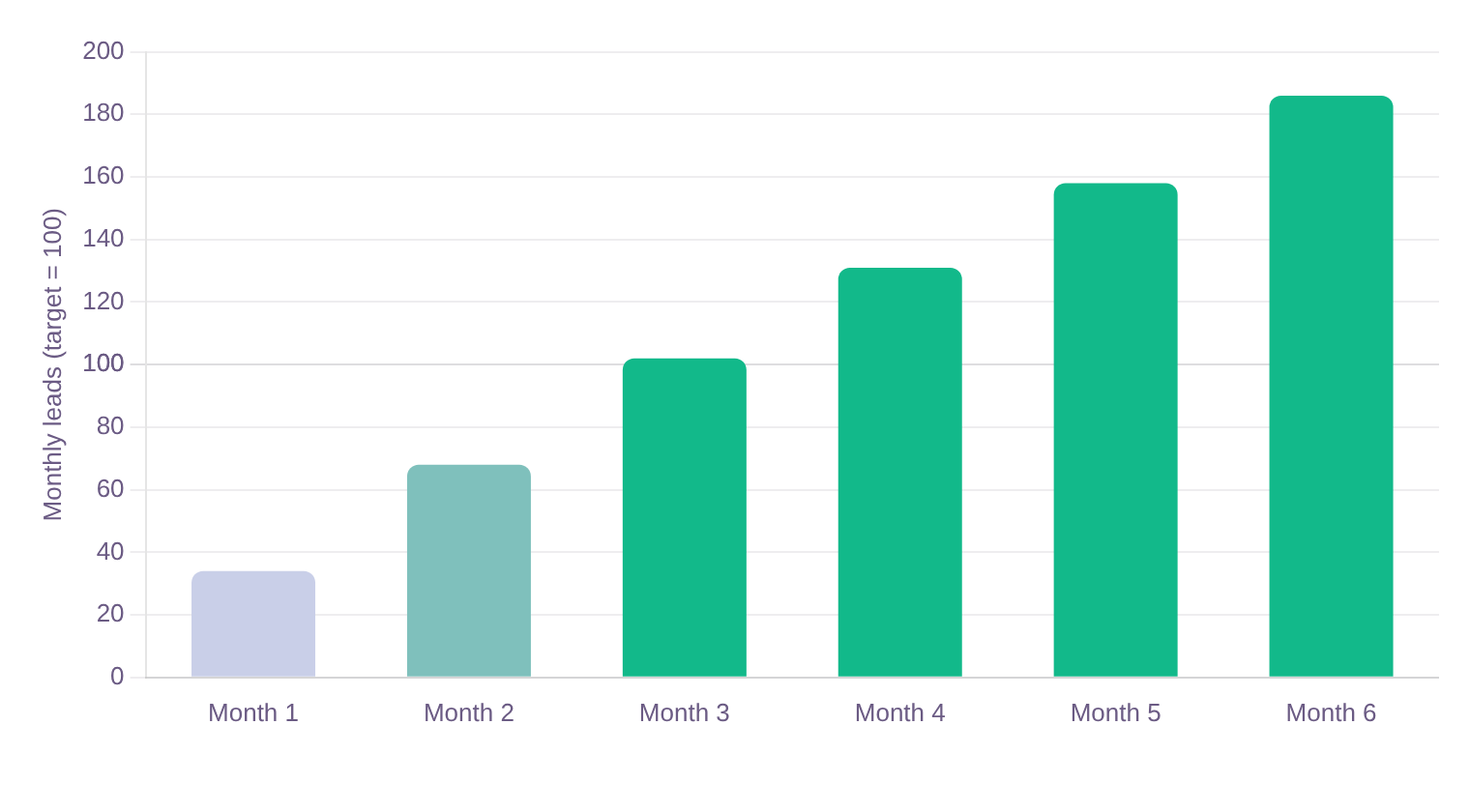
Monthly qualified leads vs target. Lead volume scaled to the client's target goal by month three and continued growing month over month from there, built on the persona-led foundation established at the start. (Indexed to the target = 100; illustrates the documented trajectory.)
Which SEO, PPC, and LinkedIn Tactics Were Used?
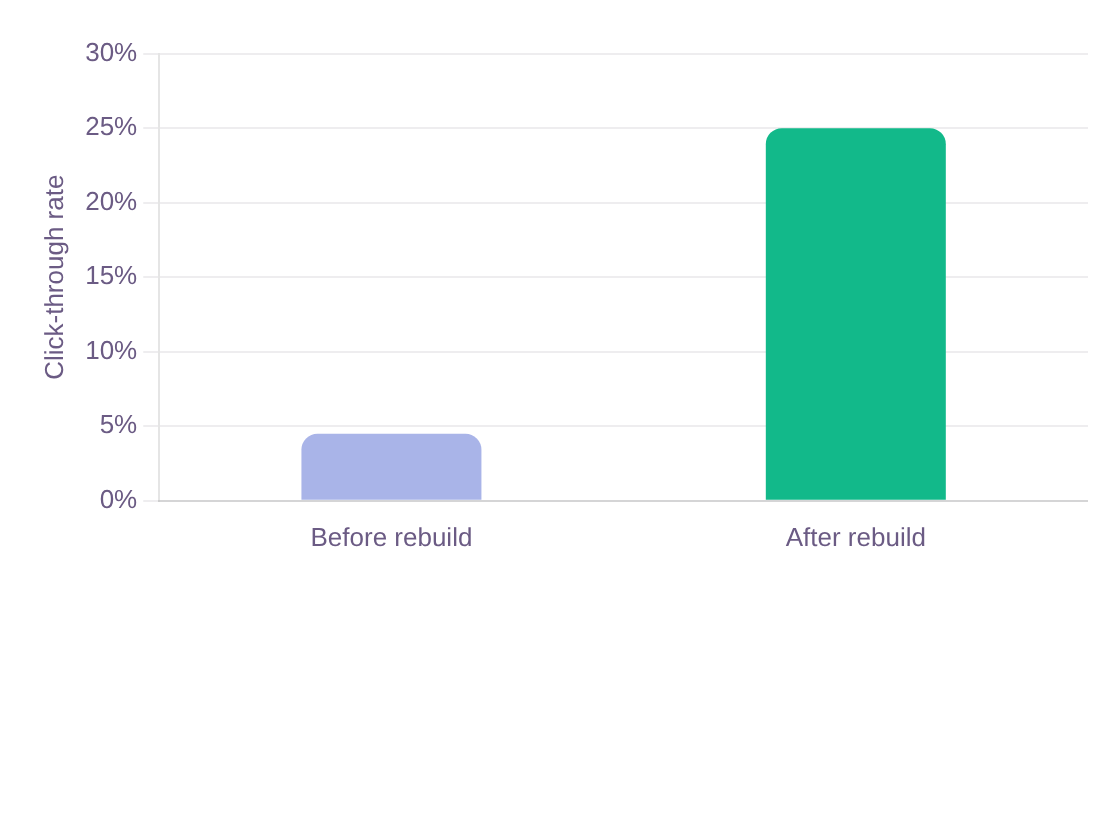
Google Search click-through rate, before vs after the rebuild. Precise, persona-matched messaging and keyword targeting drove click-through rate above 25% — several times typical category benchmarks, with the same budget reaching far more of the right buyers. (Before figure indexed to illustrate the documented lift above 25%.)
How Did Buyer Personas Shape the Marketing Strategy?
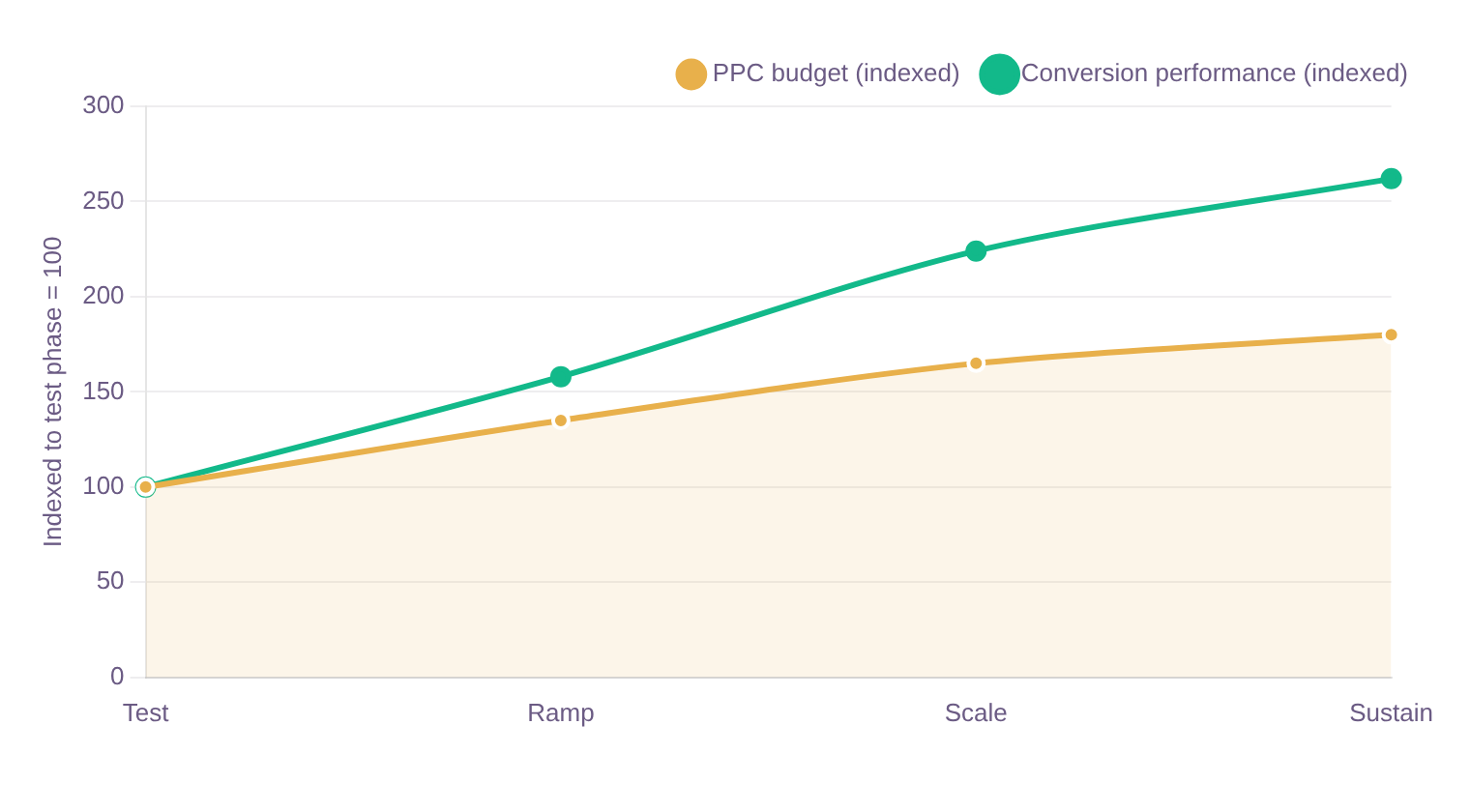
PPC budget scaled in step with proven conversion performance. Spend started deliberately low to test what worked and what didn't, then increased only once conversion performance justified it — reaching the lead-generation target without unnecessary spending.
How Did Dedicated Landing Pages Improve Campaign Performance?
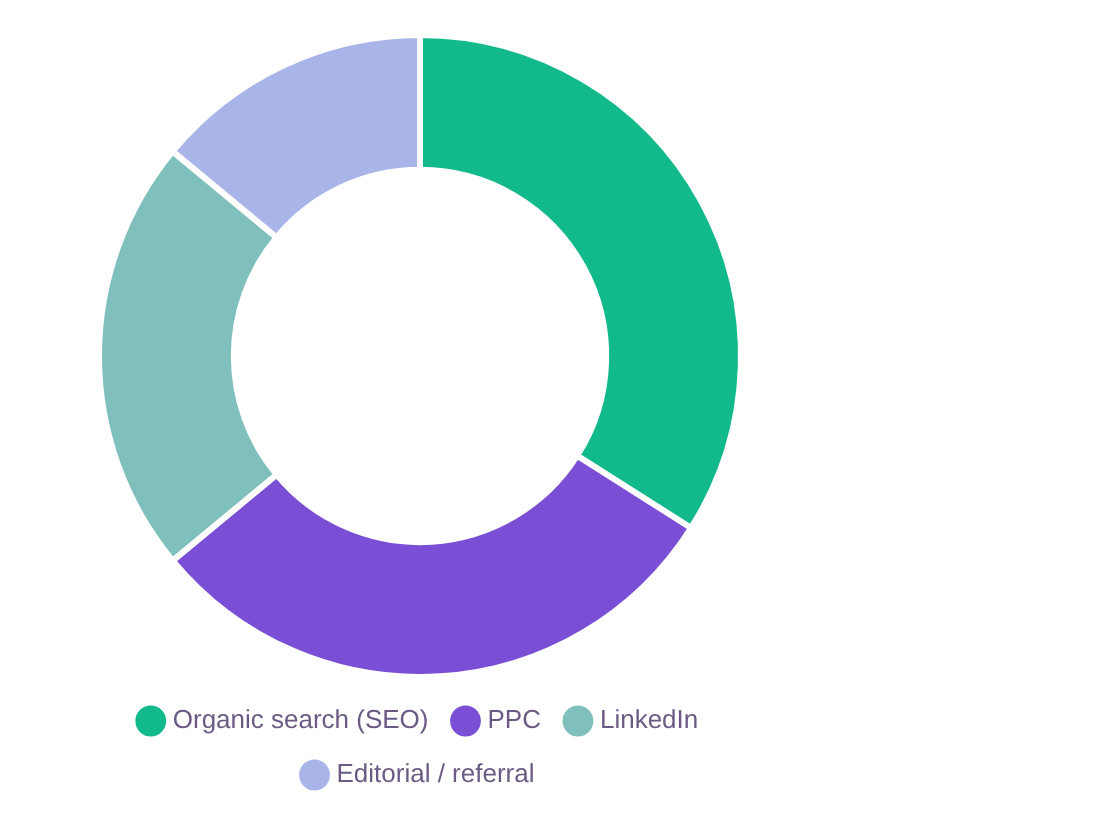
Lead contribution by channel over the engagement. SEO, editorial content, LinkedIn, and PPC were designed to work together from the outset — each directing prospects to purpose-built landing pages aligned to specific personas, creating multiple paths to qualified leads rather than relying on any single channel. (Relative contribution; illustrates the documented multi-channel mix.)
What Can Other Cybersecurity Companies Learn From This Case Study?
See where your brand shows up across search and AI answer engines, and how a persona-led strategy turns visibility into qualified pipeline. Start with a free AI Visibility Report.
Get a free AI Visibility Report →