
LLM SEO Services to Get Cited in AI Answers
LLM Search Engine Optimization for the AI Search Era
SEO has evolved.
It is no longer enough to rank on Google alone. Your brand also needs to appear in AI-generated answers, recommendation engines, conversational search results, source lists, and the responses buyers now use to make decisions.
That is where LLM SEO comes in.
Shoden Global provides LLM SEO services that help your brand become easier for large language models to understand, trust, mention, cite, and recommend. We optimize your website, content, brand entity, authority signals, and external visibility so your company can show up in AI answers across platforms such as ChatGPT, Gemini, Claude, Perplexity, Google AI Overviews, and other AI-powered search environments.
Traditional SEO is still the foundation. LLM SEO is the next evolution.
LLM SEO is not the death of keyword research. It is the evolution of keyword research into prompt, topic, and answer optimization.
Your buyers are not only searching anymore. They are asking. They are comparing. They are reading AI summaries. They are using answer engines to decide which brands are worth their attention.
If your brand is missing from those answers, you are missing visibility at the moment decisions are being shaped.
SEO Has Now Become LLM SEO
For years, strong SEO meant ranking for the right keywords, building technical foundations, creating useful content, and earning authority.
That still matters.
In fact, traditional SEO still does much of the heavy lifting. Your website needs to be crawlable, technically sound, keyword-relevant, content-rich, and trusted. But rankings and traffic are no longer the full story.
The search journey has changed.
Today, buyers ask AI tools questions like:
- “Who is the best provider for this service?”
- “Which company should I choose?”
- “What are the top solutions in this market?”
- “Which brand is most trusted for this problem?”
- “Who offers LLM SEO services?”
- “How can my company get cited in AI answers?”
These questions influence decisions before a buyer ever lands on your website.
That means your brand needs to do more than rank. It needs to be understood by AI systems, included in relevant answers, cited as a source, and associated with the topics you want to own.
This is why SEO has evolved into LLM SEO and AI visibility optimization.
How We Evolved to Lead in the AI Era
Shoden Global has always focused on building brand authority, search visibility, and organic growth through proven SEO and technical SEO strategies. That foundation is still essential.
But the landscape has changed.
Online visibility is no longer limited to search engine results pages. Brands now need to appear inside AI-generated answers, LLM recommendations, comparison responses, and source-backed summaries.
That is why our services have evolved from a traditional SEO focus into a broader AI visibility strategy built around:
- LLM SEO
- Generative Engine Optimization
- LLM seeding
- AI visibility audits
- Entity optimization
- On-site LLM optimization
- Off-site authority building
- Citation engineering
- AI answer tracking
- Digital PR for AI search
The goal is simple: make your brand visible where modern buyers are now asking questions.
We help your company become not just ranked in search, but cited, mentioned, and recommended by AI platforms and large language models.
Traditional SEO builds the foundation. LLM SEO expands that foundation into AI-generated discovery.
How We Evolved to Lead in the AI Era
Shoden Global has always focused on building brand authority, search visibility, and organic growth through proven SEO and technical SEO strategies. That foundation is still essential.
But the landscape has changed.
Online visibility is no longer limited to search engine results pages. Brands now need to appear inside AI-generated answers, LLM recommendations, comparison responses, and source-backed summaries.
That is why our services have evolved from a traditional SEO focus into a broader AI visibility strategy built around:
- LLM SEO
- Generative Engine Optimization
- LLM seeding
- AI visibility audits
- Entity optimization
- On-site LLM optimization
- Off-site authority building
- Citation engineering
- AI answer tracking
- Digital PR for AI search
The goal is simple: make your brand visible where modern buyers are now asking questions.
We help your company become not just ranked in search, but cited, mentioned, and recommended by AI platforms and large language models.
Traditional SEO builds the foundation. LLM SEO expands that foundation into AI-generated discovery.
Why LLM SEO Is So Important
Large language models are becoming a new layer of online visibility.
Buyers are increasingly using AI systems to research companies, compare providers, summarize options, and decide who to trust. Instead of clicking through ten search results, they may ask one question and receive a short answer with a small number of recommended brands or cited sources.
That changes the strategy.
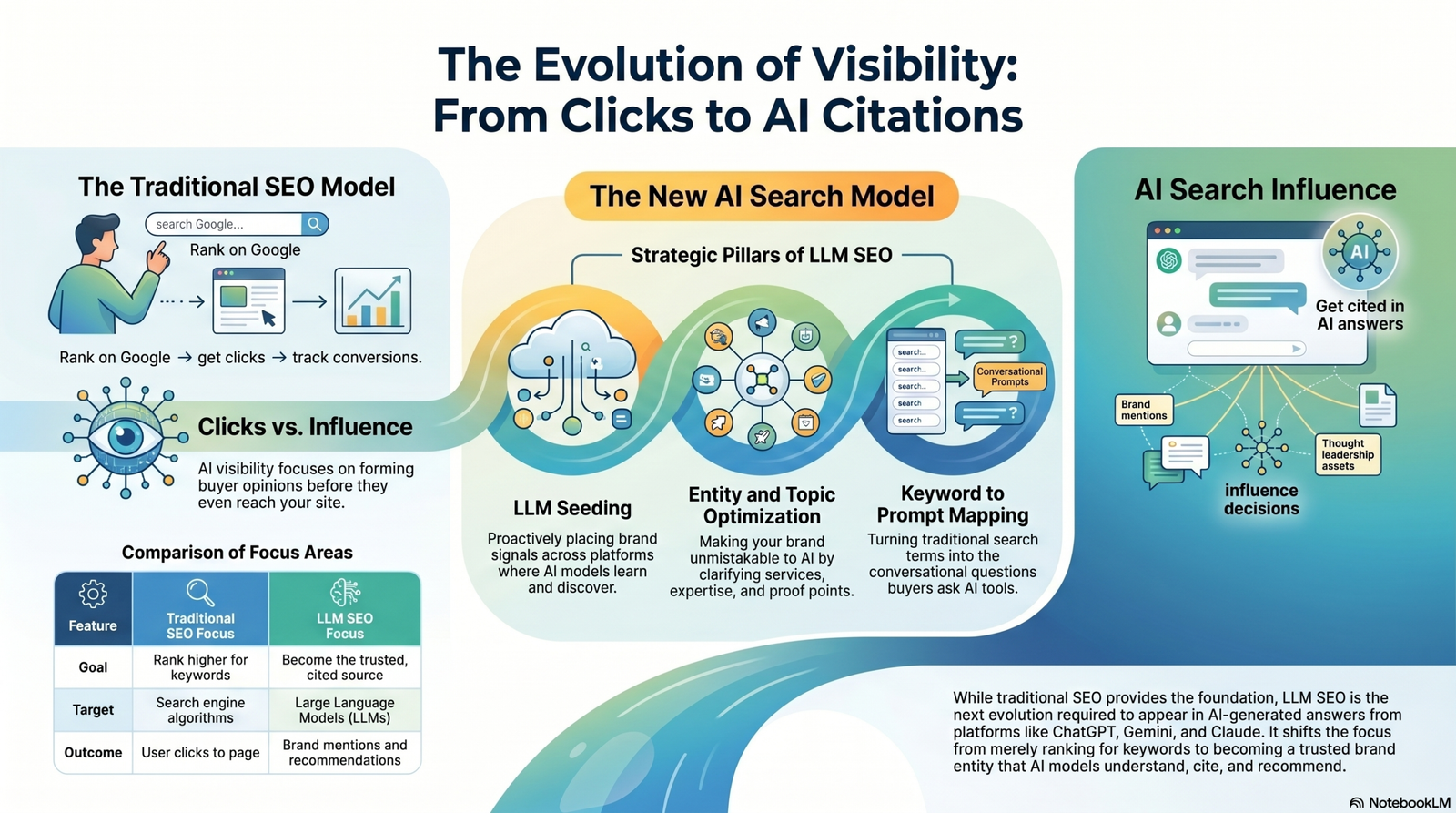
The old search model was:
Rank on Google → get clicks → track conversions.
The new AI search model is:
Get cited in AI answers → influence decisions → increase branded search, direct traffic, trust, and demand.
Users do not always click immediately. They ask, compare, remember, and return later.
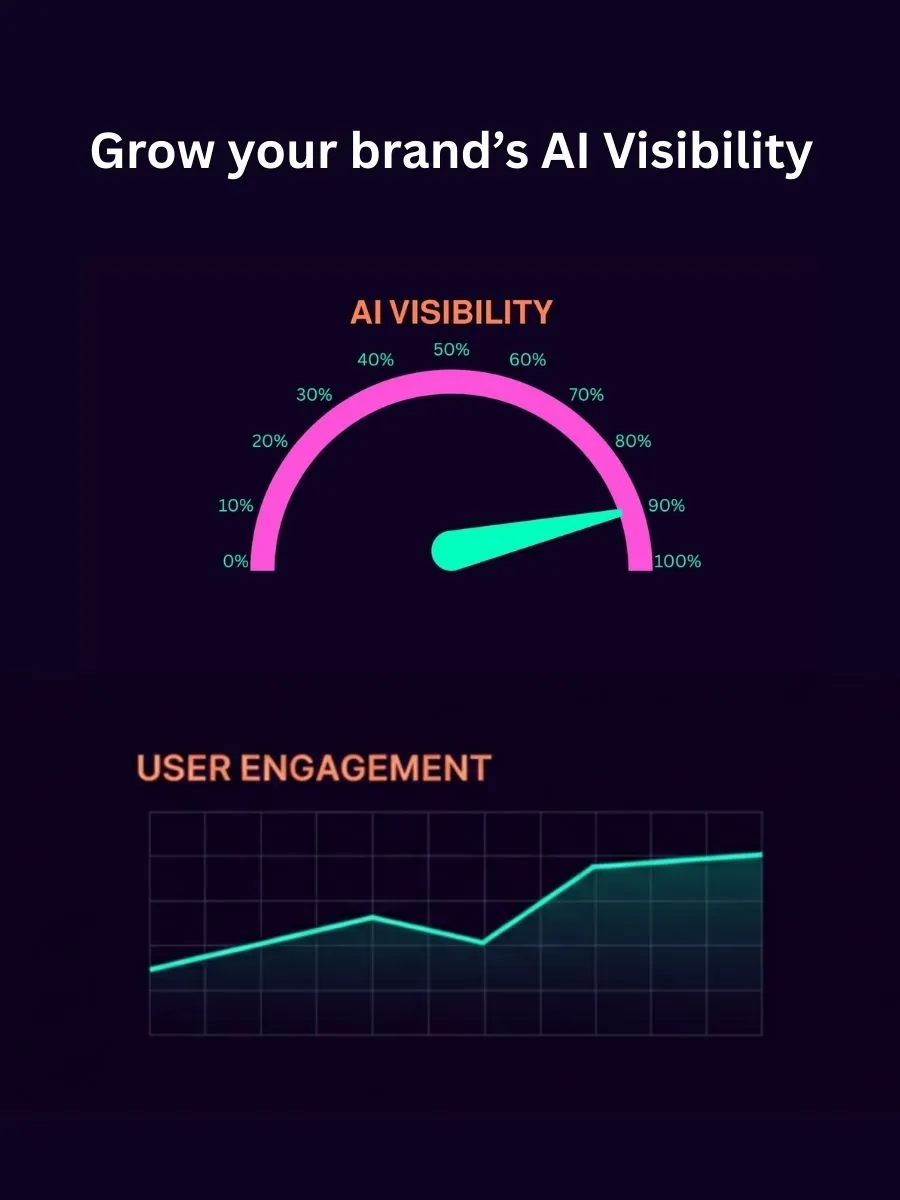
That means AI visibility is not only about traffic. It is about influence.
When your brand appears in AI-generated answers, you gain presence at the point where buyers are forming opinions. When your competitors appear and you do not, you lose visibility before the buyer even reaches your site.
LLM SEO helps fix that by making your brand clearer, stronger, and more citable across the sources AI systems use to generate responses.
Keywords Still Matter: They Are the Foundation of LLM SEO
LLM SEO does not remove the need for keyword research. It makes keyword research even more important.
Your buyers still use words, phrases, problems, comparisons, and questions to search for solutions. The difference is that those searches are no longer limited to traditional search engines. The same intent now appears inside AI prompts, conversational questions, Google AI Overviews, Perplexity answers, ChatGPT recommendations, Gemini responses, and Claude research journeys.
That means keywords are still the foundation — but the strategy has evolved.
Traditional SEO asks:
“Which keywords should we rank for?”
LLM SEO asks:
“Which keywords, topics, and prompts should our brand be part of when AI generates an answer?”
Every AI prompt is built from language. That language usually comes from the same keyword universe that drives traditional SEO: service terms, problem terms, comparison terms, industry terms, competitor terms, use-case terms, and buyer-intent phrases.
For example, a traditional keyword might be:
LLM SEO agency
But in AI search, that keyword becomes prompts such as:
- “What is the best LLM SEO agency?”
- “Which agency can help my brand appear in AI answers?”
- “How do I choose an LLM SEO company?”
- “What are the top LLM SEO services for B2B brands?”
- “Who can help us get cited in ChatGPT and Perplexity?”
- “What is the difference between LLM SEO and traditional SEO?”
The keyword is still there. The format has changed.
That is why strategic keyword research, keyword analysis, competitor research, and gap analysis remain essential to LLM SEO. We need to know what your audience searches, what they ask, which topics they care about, which competitors already appear, and where your brand is missing.
At Shoden Global, we use keyword research to build the foundation for prompt targeting, topic ownership, content planning, on-site optimization, LLM seeding, and AI visibility tracking.
The goal is no longer only to rank for keywords.
The goal is to become part of the answer when those keywords become questions.
What Is LLM SEO?
LLM SEO, or Large Language Model Search Engine Optimization, is the process of optimizing your digital presence so AI systems can understand your brand, connect it to the right topics, and reference it in relevant answers.
It is not only about optimizing one webpage.
LLM SEO includes your:
- Website content
- Service pages
- Brand entity
- Internal linking
- Structured data
- FAQs
- Author and company information
- Topic authority
- External mentions
- Digital PR
- Third-party citations
- Guest posts
- Thought leadership
- Industry references
- AI visibility tracking
Large language models process meaning, relationships, entities, context, repeated signals, and trusted references. They need to understand who you are, what you do, who you help, why you are credible, and which topics your brand should be associated with.
LLM SEO gives AI systems clearer signals.
It helps your brand become easier to understand, easier to summarize, easier to cite, and easier to recommend.
What Is LLM Seeding?
LLM seeding is one of the strategies that supports LLM SEO.
It means proactively placing citation-worthy, useful, and trustworthy brand signals across the platforms, publications, and content formats that large language models may discover, process, and reuse.
In simple terms, LLM seeding plants your brand across the web in the places AI systems are likely to learn from.
This can include:
- Optimized service pages
- Expert content
- Digital PR placements
- Guest posts
- Thought leadership articles
- Industry profiles
- Citation-worthy resources
- Third-party mentions
- Structured brand descriptions
- Relevant comparison content
- Selected list-based recommendation placements
LLM seeding is not spam. It is not about forcing mentions into low-quality content. It is about building a consistent, credible, and semantically clear presence across the sources that shape AI-generated answers.
At Shoden Global, LLM seeding works together with LLM SEO, GEO, digital PR, and citation engineering to help your brand earn more visibility inside AI search.
Who Needs LLM SEO?
LLM SEO is for any business whose buyers search, compare, and make decisions using Google, AI tools, answer engines, or recommendation platforms.
It is especially important for brands in competitive markets where buyers ask questions before they convert.
You need LLM SEO if:
- Your buyers search for your services using high-intent keywords.
- Your buyers ask AI tools for recommendations.
- Your competitors appear in AI answers and you do not.
- You rank for some keywords but do not appear in AI-generated answers.
- You want to own important topics in your niche.
- You need to turn keyword research into prompt visibility.
- You want to identify gaps between search rankings and AI answer presence.
- You want to get cited in ChatGPT, Perplexity, Gemini, Claude, or Google AI Overviews.
- Your content is not structured for AI extraction.
- You want to increase branded search and direct demand.
SEO is still the foundation. Your buyer personas are still asking questions, and those questions still map to topics, keywords, and search intent.
The difference is that those keywords are now being used inside AI prompts as well as traditional search engines.
That means keyword research, competitor analysis, content gap analysis, and search intent mapping are still essential. We still need to know which terms matter, which topics drive demand, which competitors are visible, and which content gaps prevent your brand from being seen.
But LLM SEO takes the next step.
It turns keyword research into prompt strategy.
It turns topics into answer opportunities.
It turns content gaps into AI visibility priorities.
It turns SEO into a system for ranking, being cited, and being recommended.
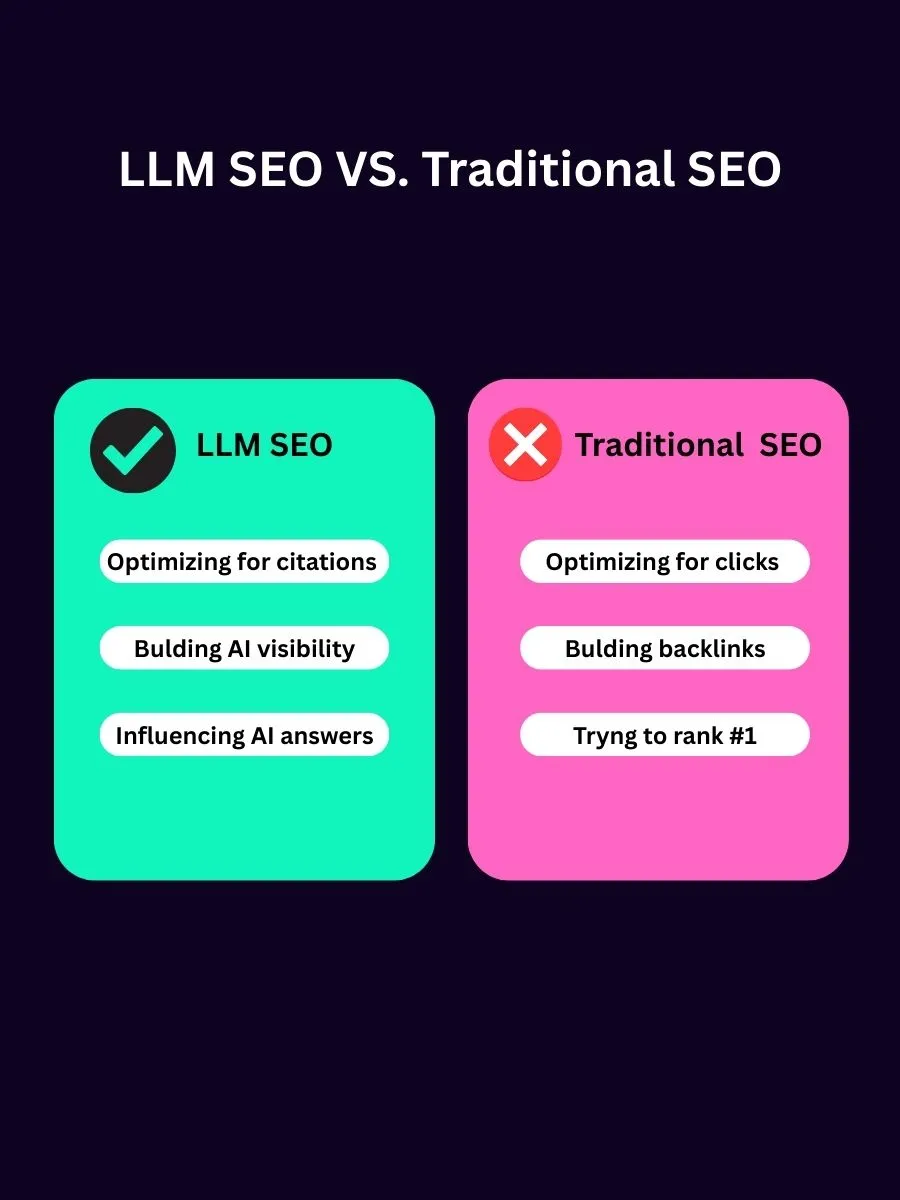
LLM SEO vs Traditional SEO
Traditional SEO focuses on improving your visibility in search engine results.
LLM SEO focuses on improving your visibility inside AI-generated answers.
Both are connected, but they are not the same.
Traditional SEO asks:
How do we rank higher for this keyword?
LLM SEO asks:
How do we become the brand AI systems understand, trust, cite, and recommend for this topic?
Traditional SEO includes keyword research, technical SEO, content optimization, internal linking, backlinks, and ranking improvement.
LLM SEO includes those foundations, but adds:
- AI visibility audits
- Prompt testing
- Entity optimization
- Answer-ready content
- AI citation tracking
- Source inclusion analysis
- LLM seeding
- Citation engineering
- AI-focused digital PR
- Structured summaries
- Clear brand-topic associations
- External authority signals
Traditional SEO helps people find your pages.
LLM SEO helps AI systems understand your brand and include it in answers.
For modern search visibility, you need both.
Keywords still connect both worlds.
In traditional SEO, keywords help us understand search demand. In LLM SEO, those same keywords help us understand the questions, prompts, and topics buyers use when asking AI systems for help.
The keyword is the seed. The prompt is the question. The AI answer is the new search result.
That is why LLM SEO still begins with keyword research, competitor analysis, and content gap analysis. The difference is that we now use that research to optimize for both search rankings and AI answer inclusion.
Teach AI Systems Your Story
Make it obvious to AI models who you are and when to name you.
LLM SEO makes your organization unmistakable to the systems people now consult for answers. It aligns your site, brand, content, and authority signals with how modern answer engines read, extract, summarize, and credit information.
This is not about tricks.
It is about clarity and proof.
AI systems need to understand:
- Your brand
- Your services
- Your products
- Your expertise
- Your audience
- Your differentiators
- Your proof points
- Your topic authority
- Your trusted references
- The questions your brand should answer
If your website does not express clear claims, visible expertise, structured explanations, and helpful answers, AI systems may hesitate to mention or cite you.
If respected third-party sources do not validate your story, AI systems may recommend competitors instead.
LLM SEO fixes that by making your brand clearer, more credible, and easier to reuse in AI-generated answers.

Our LLM SEO Services
LLM Visibility Audit
We benchmark where your brand appears today, how AI systems describe you, and which pages or sources currently produce mentions, citations, or inclusion.
Our LLM visibility audit identifies:
- Where your brand appears in AI answers
- Where competitors are winning visibility
- Which prompts matter most
- Which topics you should own
- Which pages are being cited
- Which sources influence AI answers
- Where your entity signals are unclear
- Where your topical authority is weak
- Which content gaps limit your visibility
This gives us a clear roadmap for improving your AI visibility.
Keyword, Prompt and Topic Research
Keyword research is still at the core of LLM SEO.
We analyze the keywords your buyers use, the questions they ask, the topics they care about, and the competitors they compare you against. Then we turn that research into a strategic AI visibility plan.
This includes:
- Traditional keyword research
- Search intent analysis
- Buyer question mapping
- Prompt research
- Topic cluster planning
- Competitor keyword analysis
- AI answer competitor analysis
- Content gap analysis
- Commercial intent mapping
- Comparison query research
- Prompt-to-keyword mapping
The goal is to understand not only what your buyers search, but how they ask for answers.
A keyword like “best cybersecurity software” may become dozens of AI prompts, including:
- “What is the best cybersecurity software for a small business?”
- “Which cybersecurity tools are recommended for SaaS companies?”
- “What are the top cybersecurity platforms for enterprise teams?”
- “Which cybersecurity vendor should I compare before buying?”
- “What are the best alternatives to (competitor)?”
Each prompt represents a visibility opportunity.
Our LLM SEO strategy identifies those opportunities, prioritizes them, and builds the content, structure, and authority signals needed to help your brand appear in the answers.
On-Site LLM Optimization
We optimize your website so AI systems can extract, understand, and reuse your content more effectively.
This includes improving:
- Page structure
- Headings
- Short summaries
- Service definitions
- FAQs
- Schema opportunities
- Internal links
- Topic clusters
- Author and brand information
- Entity clarity
- Content depth
- Answer-ready sections
The goal is to reduce confusion and help AI systems recognize your website as a reliable source.
When your pages clearly explain what you do, who you help, and why your brand is credible, AI tools have better information to work with.
Entity and Topic Authority Optimization
Your brand is an entity. AI systems need to understand that entity clearly.
We strengthen the relationship between your brand and the topics you want to own. This includes clarifying your services, categories, audiences, industries, proof points, and differentiators across your website and external sources.
Strong entity optimization helps AI systems connect your brand with relevant searches and prompts.
For example, if your company wants to be known as a leader in a specific niche, your website and external signals need to repeatedly and consistently support that association.
LLM SEO makes those associations clearer.
AI Search Content Strategy
LLM SEO requires content that answers real buyer questions in a clear and structured way.
We create content strategies around:
- Commercial prompts
- Buyer questions
- Problem-solution searches
- Comparison queries
- Service definitions
- Glossary terms
- Industry guides
- Use-case pages
- FAQ clusters
- Thought leadership
- Source-worthy content assets
This helps your website become a stronger source of truth in your niche.
The goal is not just more content. The goal is content that AI systems can understand, summarize, cite, and connect to your brand.
Off-Site Authority and Citation Engineering
AI systems do not only look at your website. They also evaluate signals from the wider web.
That is why off-site authority is a key part of LLM SEO.
We help build credible external signals through:
- Digital PR
- Guest posting
- Expert commentary
- Thought leadership articles
- Industry references
- Third-party brand mentions
- Citation-worthy placements
- Relevant authority sources
- Strategic content distribution
This supports your brand’s credibility beyond your own domain.
When trusted external sources reinforce your expertise, AI systems have stronger reasons to mention and cite your brand.
LLM Seeding Strategy
LLM seeding is how we place your brand in the right information environments.
We identify where AI systems may be learning about your market and where your brand needs stronger representation. Then we build content and authority signals that connect your company with the topics, questions, and commercial prompts that matter.
This can include your own website, third-party publications, guest posts, expert resources, industry content, and selected recommendation-based assets.
LLM seeding helps your brand become more present across the digital ecosystem AI systems use to generate answers.
GEO and AI Answer Optimization
Generative Engine Optimization, or GEO, works closely with LLM SEO.
While LLM SEO focuses on making your brand understandable and citable to large language models, GEO focuses on improving visibility inside AI-generated search results and answer engines.
Together, LLM SEO and GEO help your brand appear in:
- AI summaries
- Recommendation answers
- Comparison responses
- Cited source lists
- Google AI Overviews
- Perplexity-style answers
- ChatGPT-style recommendations
- AI-powered research journeys
Shoden Global combines both strategies to help your brand become more visible across the full AI search landscape.
Measurement and AI Citation Tracking
LLM SEO needs measurement.
We track your answer coverage, brand inclusions, AI mentions, citations, source appearances, and prompt-level visibility over time.
This helps you understand:
- Where your brand is gaining AI visibility
- Which topics are improving
- Which prompts mention your brand
- Which sources are being cited
- Which competitors are still ahead
- Which content assets are working
- Which placements are producing movement
- Where the next opportunities are
You see growth in the places where modern decisions start and where brand trust is built.
How Our LLM SEO Process Works
1. Discover Your Current AI Visibility
We begin by testing the prompts, topics, and questions your buyers are likely to ask.
We analyze where your brand appears, where competitors appear, how AI systems describe your company, and which sources shape the answers.
This gives us a clear baseline.
2. Research Keywords, Prompts and Competitor Gaps
We analyze the keywords your buyers search, the prompts they are likely to ask, and the competitors already appearing in both traditional search results and AI-generated answers.
This research helps us identify:
- Which keywords still matter for rankings
- Which prompts matter for AI visibility
- Which competitors dominate the answers
- Which topics your brand needs to own
- Which pages need to be improved
- Which content gaps need to be filled
- Which external sources influence AI answers
- Which questions your brand should become part of
This turns traditional keyword research into an AI visibility roadmap.
3. Identify the Topics You Need to Own
Your buyers ask questions that belong to specific topics. Those topics are connected to keywords, search intent, category language, and commercial demand.
We identify the topics your brand needs to own in order to appear in relevant AI answers.
This includes commercial prompts, comparison queries, service questions, problem-based searches, and authority-building topics.
4. Optimize Your Website for LLM Understanding
We rebuild and refine priority pages so AI systems can extract meaning quickly.
This includes stronger headings, concise summaries, clear service explanations, FAQs, schema opportunities, internal links, and structured sections that clarify what your brand does.
The goal is to make your website easier for AI systems to read, understand, and trust.
5. Strengthen Your Brand Entity
We make your company unmistakable to models.
That means improving how your brand, services, products, expertise, audience, and proof points are described across your site and the wider web.
The clearer your entity, the easier it becomes for AI systems to associate your brand with the right answers.
6. Build External Proof
Your own website is not enough.
AI systems are more likely to reuse, summarize, and cite information when it is supported by trusted external signals.
We build external proof through digital PR, citation engineering, guest posting, thought leadership, relevant third-party mentions, and other authority-building placements.
This helps validate your brand beyond your own claims.
7. Track Mentions, Citations and Answer Coverage
We monitor how your brand appears in AI answers over time.
This includes mentions, citations, source appearances, prompt visibility, competitor comparisons, and topic-level progress.
LLM SEO is not a one-time edit. It is an ongoing process of improving clarity, authority, and answer visibility.
What Makes Content Ready for LLM SEO?
Content that works for LLM SEO is not vague, thin, or generic.
It is clear, structured, useful, and easy to summarize.
Strong LLM SEO content usually includes:
- Clear definitions
- Concise summaries
- Descriptive headings
- Helpful FAQs
- Specific examples
- Strong internal links
- Consistent terminology
- Clear brand positioning
- Authoritative explanations
- Source-worthy insights
- Topic depth
- Entity clarity
- Structured data opportunities
AI systems need to know what a page is about, who it helps, what problem it solves, and why it should be trusted.
That is why LLM SEO content must be written for both humans and machines.
People need clarity. AI systems need structure.
The best content gives both.
Where Guest Posts and Listicles Fit Into LLM SEO
Guest posts, thought leadership pieces, and selected recommendation placements can support LLM SEO because they create external signals around your brand.
However, they are only part of the strategy.
This LLM SEO service focuses on the full visibility system: your website, content structure, brand entity, authority signals, citations, prompts, and AI answer tracking.
For brands that specifically want to appear in best-of lists and recommendation articles, Shoden Global also offers a dedicated listicle inclusion and creation service.
That service is separate from LLM SEO, but it can support the broader LLM SEO strategy when used correctly.
LLM SEO and LLM Seeding Work Together
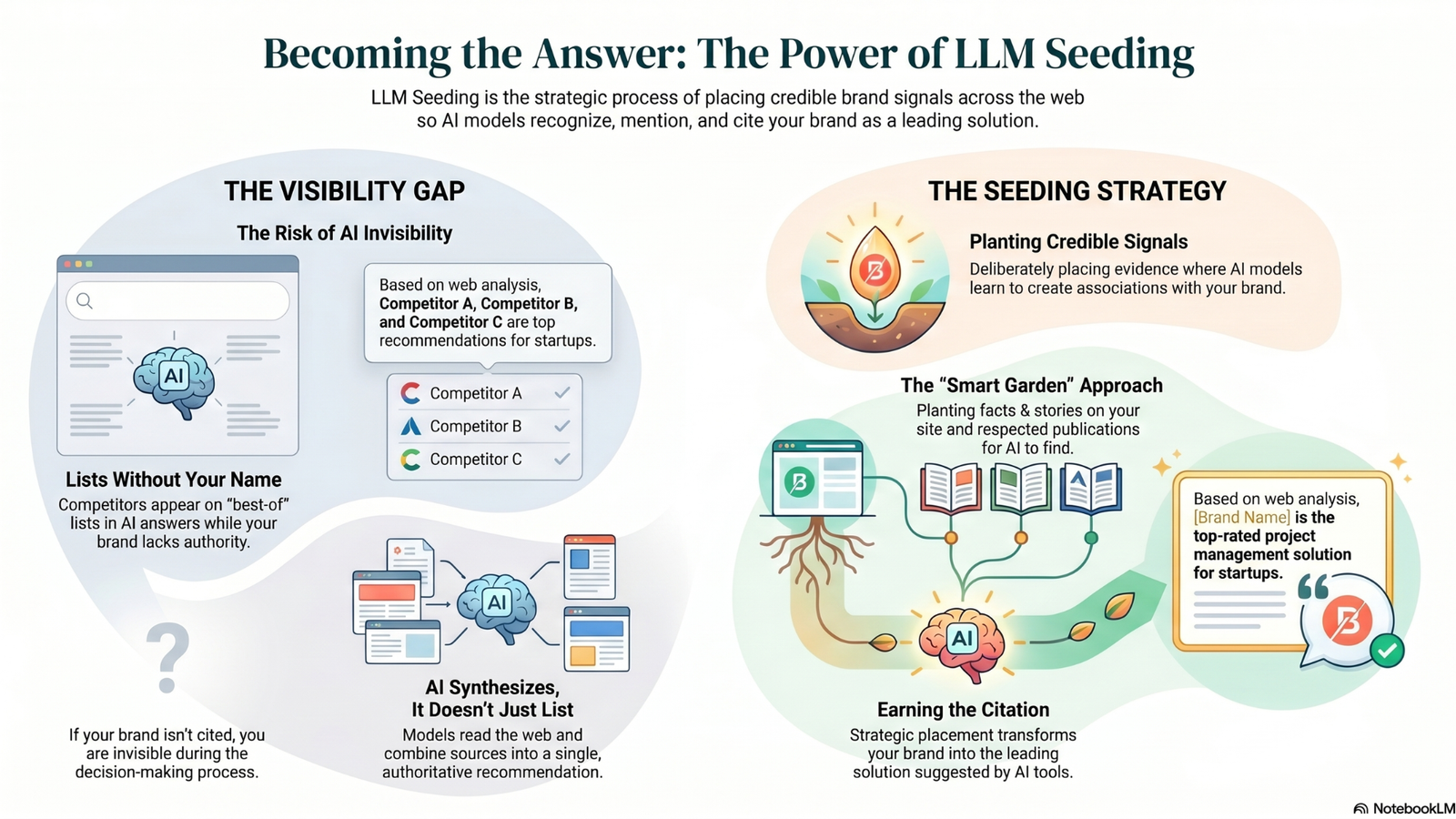
LLM SEO and LLM seeding are connected, but they are not identical.
LLM SEO improves how your own site, content, and digital presence are structured for AI understanding.
LLM seeding places credible brand signals across the external sources and formats that AI systems may discover and reference.
Together, they help your brand become more visible, more understandable, and more citable.
LLM SEO builds clarity.
LLM seeding builds presence.
Together, they help your brand earn influence inside AI-generated responses.
Why Choose Shoden Global for LLM SEO?

Shoden Global helps brands adapt to the new AI search landscape.
We combine traditional SEO foundations with LLM SEO, GEO, LLM seeding, digital PR, citation engineering, structured content optimization, and AI visibility tracking.
Our approach is built around one goal:
Make your brand the clear, trusted, and citable answer in your category.
We do not treat AI visibility as a buzzword. We treat it as a measurable visibility challenge.
We identify where you are missing, clarify your brand entity, optimize your website, build external proof, and track how your brand appears in AI answers over time.
The result is a strategy designed to help your brand move from:
- Invisible to mentioned
- Mentioned to cited
- Cited to trusted
- Trusted to recommended
- Recommended to chosen
Become the Brand AI Systems Understand, Trust and Cite
Your buyers are already using AI tools to compare providers, research solutions, and make decisions.
Your competitors may already be appearing in AI-generated answers.
Your brand may already be missing from the prompts that matter most.
Now is the time to build visibility where search is going.
Shoden Global helps your brand become easier for AI systems to understand, easier to trust, easier to cite, and easier to recommend.
If you want to show up in AI answers, build stronger authority, and become the obvious solution in your category, our LLM SEO services are built for you.
FAQs
What is LLM SEO?
LLM SEO stands for Large Language Model Search Engine Optimization. It is the process of optimizing your website, content, brand entity, authority signals, and external mentions so AI systems can understand, cite, and recommend your brand in generated answers.
How is LLM SEO different from traditional SEO?
Traditional SEO focuses on ranking pages in search engine results. LLM SEO focuses on helping your brand appear inside AI-generated answers, summaries, recommendations, and cited source lists. Both are important, but LLM SEO adds extra focus on entity clarity, structured content, citation readiness, and AI visibility.
Why does my brand need LLM SEO?
Your brand needs LLM SEO because buyers are increasingly using AI tools to research companies, compare providers, and make decisions. If your competitors appear in AI answers and your brand does not, you may lose visibility before buyers ever reach your website.
Can LLM SEO help my brand appear in ChatGPT?
LLM SEO can improve the signals that help AI systems understand and reference your brand. No agency can guarantee a specific ChatGPT mention, but strong content structure, clear entity signals, credible external mentions, and citation-worthy pages can improve your chances of appearing in relevant AI-generated answers.
What platforms does LLM SEO target?
LLM SEO supports visibility across AI-powered discovery environments such as ChatGPT, Gemini, Claude, Perplexity, Google AI Overviews, Bing Copilot-style experiences, and other answer engines.
What is an LLM visibility audit?
An LLM visibility audit analyzes where your brand appears in AI-generated answers, how AI systems describe your company, which competitors are being mentioned, which prompts matter most, and which sources are influencing answer visibility.
What is on-site LLM optimization?
On-site LLM optimization improves your website so AI systems can better understand and reuse your content. This includes clearer headings, concise summaries, structured FAQs, schema opportunities, internal links, entity clarity, and answer-ready sections.
What is LLM seeding?
LLM seeding is the strategic placement of credible brand signals across the platforms, publications, and content formats that AI systems may discover and cite. It supports LLM SEO by reinforcing your brand across trusted external sources.
Is LLM SEO the same as GEO?
LLM SEO and GEO are closely related. LLM SEO focuses on making your brand understandable and citable to large language models. GEO, or Generative Engine Optimization, focuses on improving visibility inside AI-generated search responses. In practice, the two strategies work together.
How long does LLM SEO take?
Results vary depending on your niche, competition, website quality, existing authority, content depth, and external signals. Some improvements can happen after on-site optimization, but stronger AI visibility usually requires ongoing work across content, citations, authority building, and tracking.
Is keyword research still important for LLM SEO?
Yes. Keyword research is still essential for LLM SEO. Keywords reveal demand, search intent, buyer language, competitor opportunities, and the topics your brand needs to own. In LLM SEO, those keywords are also used to build prompt strategies and identify the AI-generated answers your brand should appear in.
How are keywords used in LLM SEO?
In LLM SEO, keywords are used to map topics, buyer questions, prompts, content gaps, competitor visibility, and answer opportunities. A keyword can become many AI prompts, and each prompt represents a chance for your brand to be mentioned, cited, or recommended.
What is the difference between a keyword and a prompt?
A keyword is usually a short search phrase, such as “LLM SEO services.” A prompt is a more complete question or instruction, such as “Which agency offers the best LLM SEO services for B2B brands?” LLM SEO connects keywords to prompts so your brand can appear in AI-generated answers.
Do you still do competitor keyword analysis for LLM SEO?
An LLM visibility audit analyzes where your brand appears in AI-generated answers, how AI systems describe your company, which competitors are being mentioned, which prompts matter most, and which sources are influencing answer visibility.